
Integration backbone · NEW
Connected systems instead of brittle links.
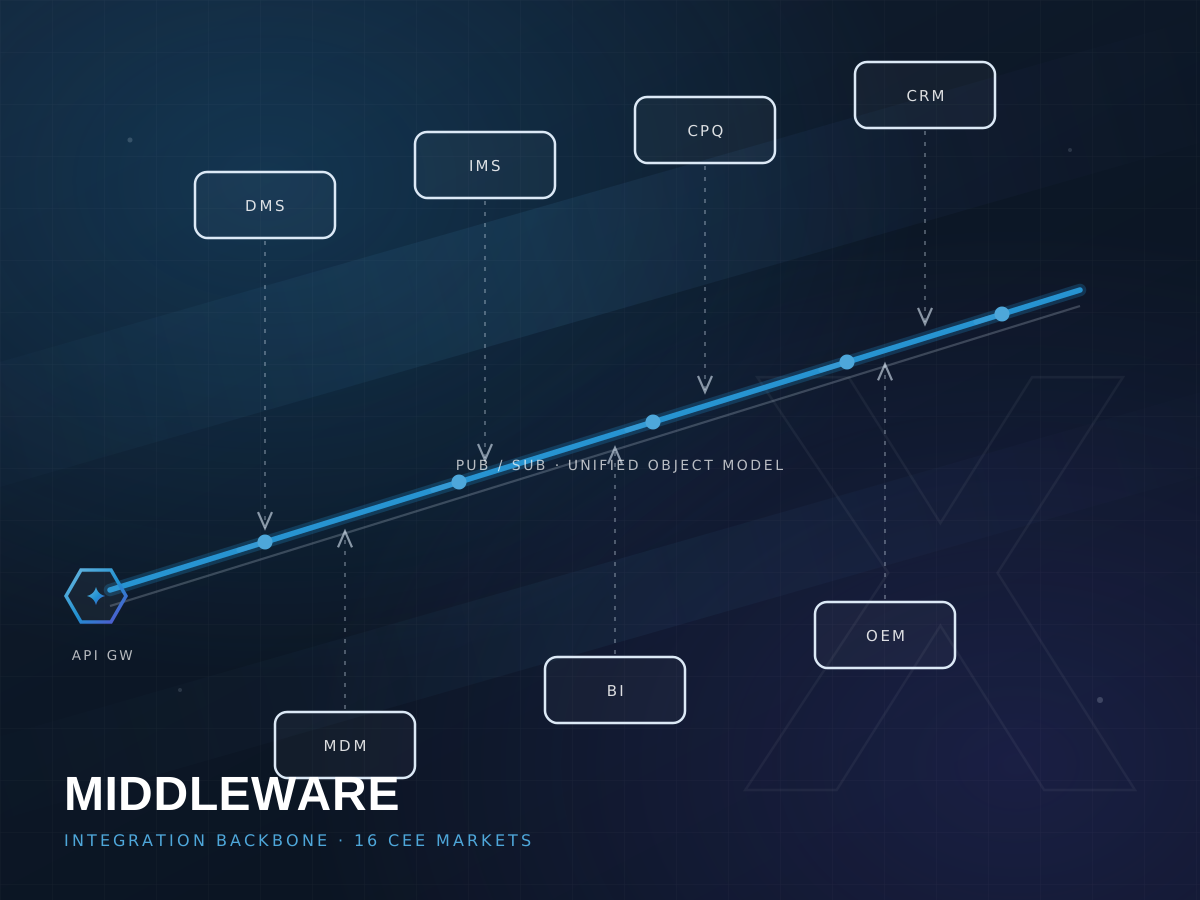
DMS, IMS, CWC, CRM, stock locator, MDM, BI and external OEM services — connected via standard contractual interfaces and shared object management. An API-led architecture with an API Gateway and event-driven orchestration (Pub/Sub). Partner teams onboard through a self-service developer portal, and delivery is governed by a project cockpit with quality gates and requirements traceability.
7+
connected systems
Business impact: From batch exchange (hours or days) to near real time →
Who it is for
Groups and importers with multiple brands and markets that want a governed integration layer instead of isolated project code.
Integrations
MuleSoft (integration layer) · API Gateway · Pub/Sub · DMS · IMS · CWC · CRM · stock locator · MDM · BI · OEM services
Core capabilities
A unified object model: lead, offer, contract, order, invoice, handover, aftersales.
Master data: network organisation, dealers, users, code lists.
Prepared for multi-country, multi-brand expansion without redesign.
Developer Portal: a visibility-tiered API catalog, OpenAPI specs synced from git, self-service apps with brokered credentials and a sandbox console on the real gateway.
Governed delivery: plan, quality gates, change and sign-off from live delivery data; every contractual requirement traceable to its solution.
How it works
One hub instead of fragile links
Group systems connect through contract interfaces (API or events); the middleware unifies data into a shared object model with master data, exchanges it with the OEM through the API gateway and publishes changes via the Pub/Sub bus — with monitoring, retries and an audit trail.
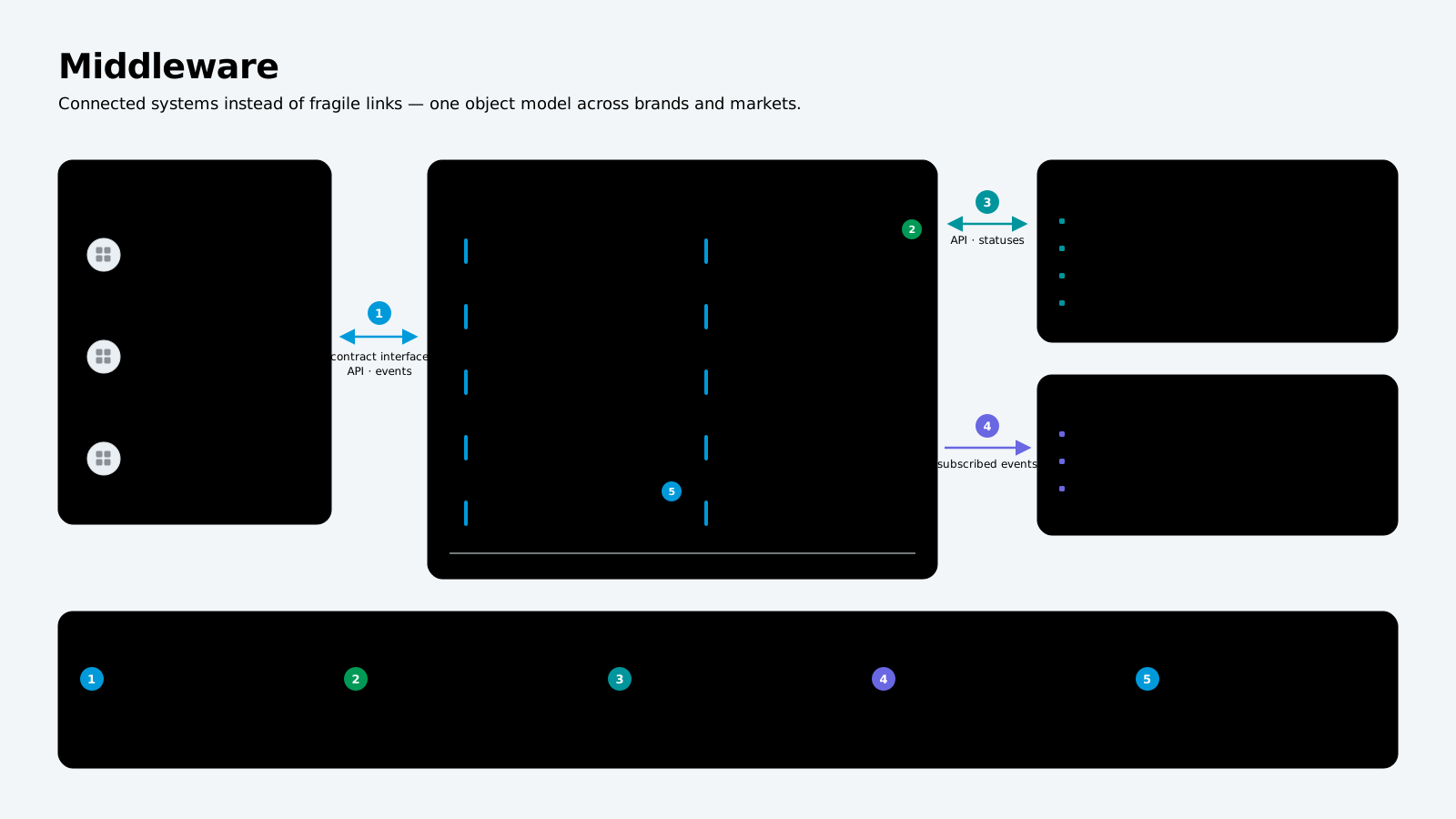
One connection per system — no point-to-point mesh; a new system, brand or market = one new connection.
A unified object model from lead to invoice with master data (MDM) and shared code lists.
Reliable delivery: queues and retries, metrics with alerts, every message in the audit trail.
Developer Portal
Onboarding without friction
A developer portal for your integration platform — developer self-service from catalog to a working integration: OIDC single sign-on, specs synced from git, app registration, credentials after approval and live testing through the real gateway.
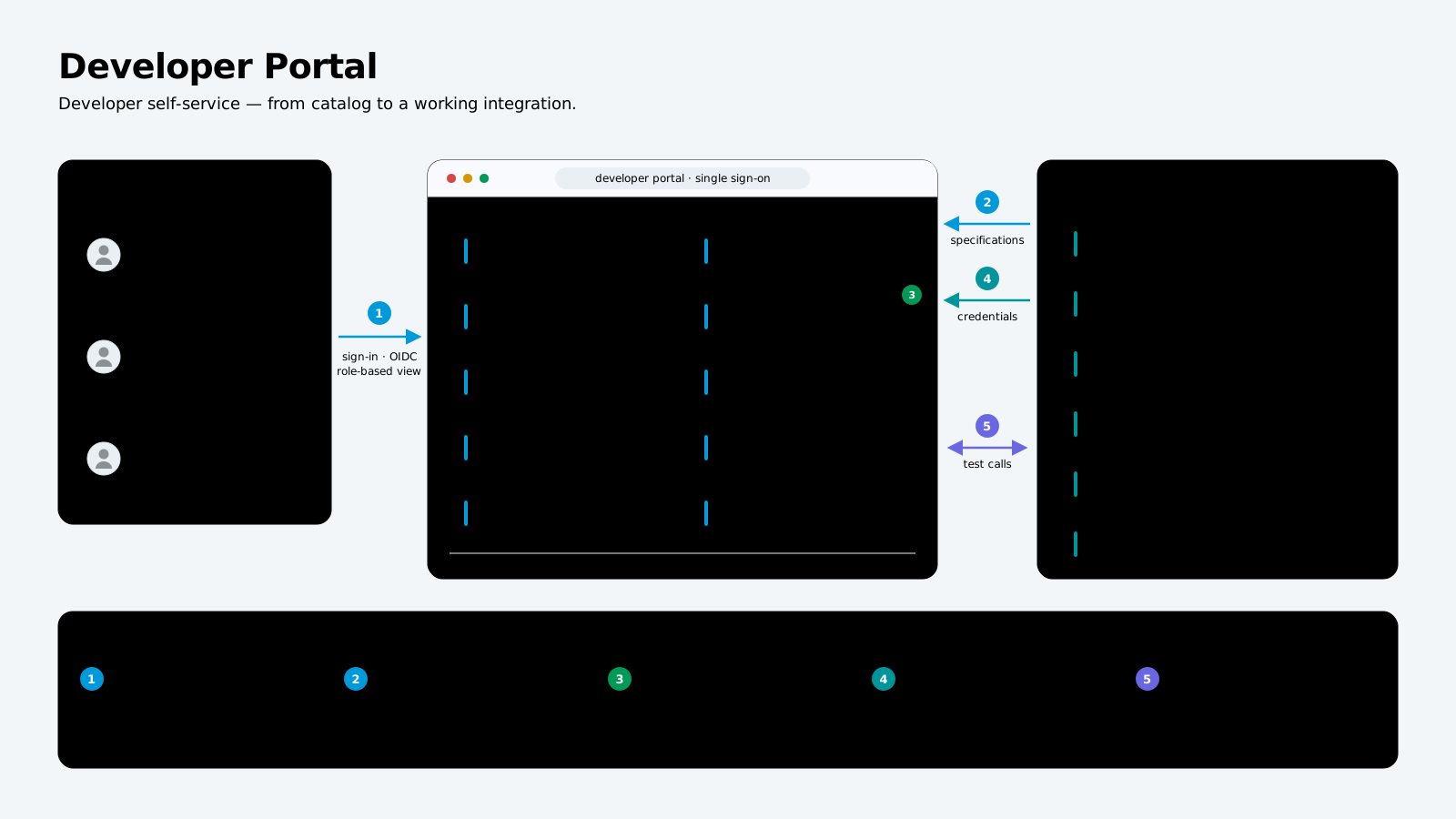
Integration catalog with role-based visibility — internal developers see the full catalog, partners only permitted content.
REST and Kafka documentation synced from git (GitOps) — OpenAPI with try-it calls and AsyncAPI with event schemas; docs never drift from the source.
Self-service app registration with an admin approval queue; credentials (SSO client, ACLs, secrets vault) shown only once.
Test and Kafka consoles — real calls through the gateway and a live event stream, before writing a line of code.
A public platform status page and an audit trail — every action recorded.
Issued credentials work independently of the portal — existing integrations keep running.
Governed delivery
Your delivery, visibly under control
A live governance cockpit for complex delivery programmes — live project governance, one source of truth and full traceability: plan, quality gates, change and sign-off in one place, from live project data. Every contractual requirement traceable to its solution.
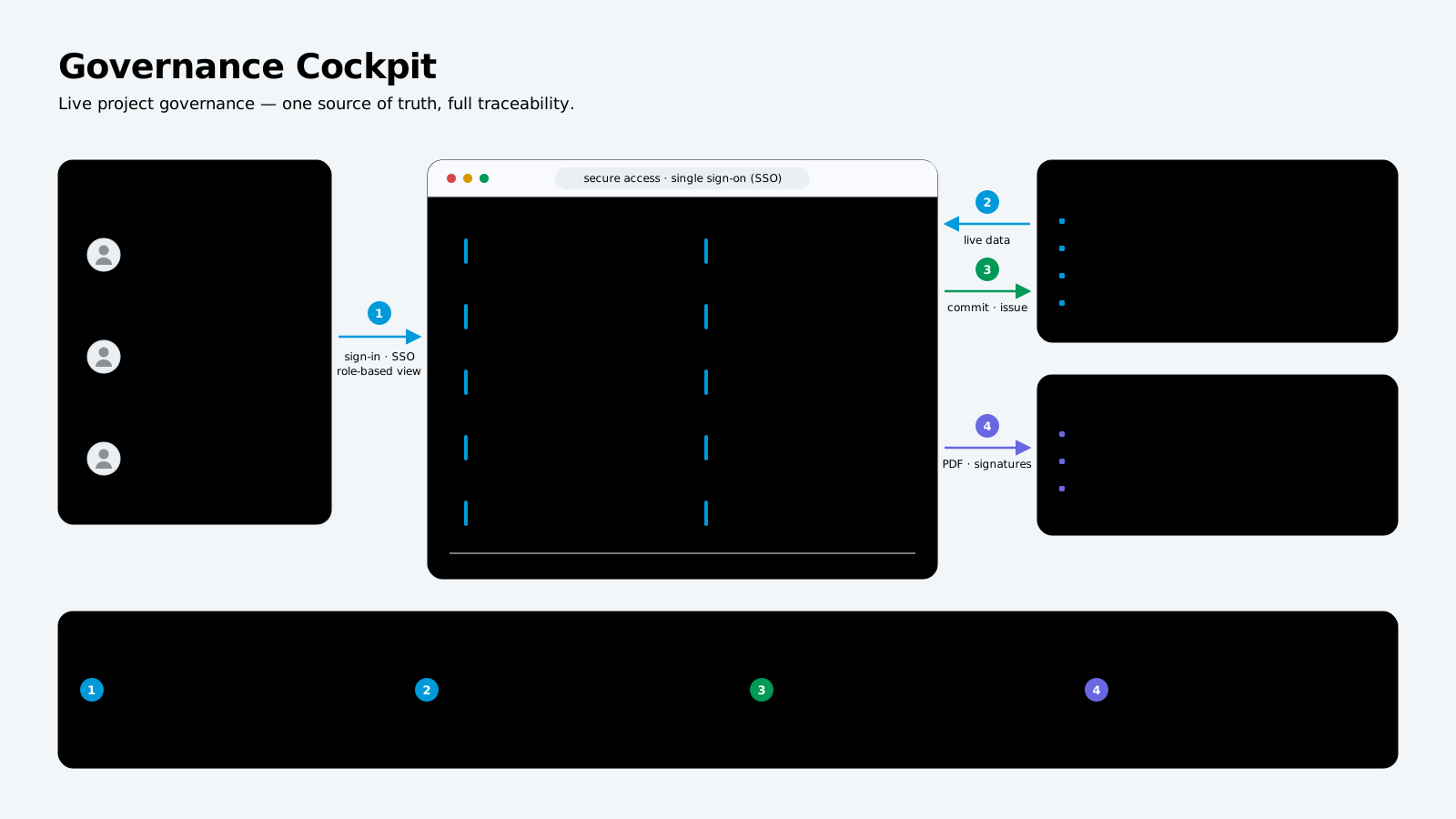
A dashboard with KPIs, deadlines and alerts; plan & WBS with baselines, sprints, meetings and an auto-drafted status report.
Quality gates with evidence packs (PDF), a signing chain of approvals and the client's electronic signatures.
Requirements traceability: a matrix of all contractual requirements → solutions; a risk register and change requests with an SLA countdown.
A git repository as the single source of truth — modules read live data, every change is a commit or an issue, not manually maintained slides.
Role-based access (client, project manager, partners): server-side RBAC, price and name masking, and an audit trail.
Minutes, reports and signed documents (timestamp and hash) published automatically to your document cloud.
Reference
Project in progress: AutoWallis Group
CEE markets (currently HU) · 7+ subsystems · 1 unified object model · MuleSoft
The AutoWallis Group (BMW, MINI, BYD, Dacia, Isuzu, Jaguar, Land Rover, MG, Opel, KGM) is replacing brittle point-to-point integrations with a governed integration layer: unified automotive objects, contract-first APIs and event-driven orchestration through an API Gateway and Pub/Sub messaging. The AutoWallis integration layer spans several Central and Eastern European (CEE) markets, currently deployed in Hungary; the architecture supports brand segregation and group-level expansion — to all countries and brands without redesign.
Reference
Project in progress: Summit Motors Ljubljana · Sumitomo Corporation (SC)
developer portal + governance cockpit · API Gateway · event-driven messaging
Summit Motors Ljubljana — importer and distributor of Ford in Slovenia, part of the Sumitomo Corporation group — is the 2026 expansion of Nebula's integration layer: importer systems (DMS, IMS, CRM, websites, after-sales) connected through contract-first interfaces, an API Gateway and event-driven messaging.
Partner and developer teams onboard self-service through the developer portal: a visibility-tiered API catalog, OpenAPI specs synced from git, brokered credentials (identity, ACLs, show-once secrets) and a sandbox console on the real gateway.
Delivery is governed by a project cockpit fed by live data: plan, quality gates with evidence and sign-off, risk and change registers, and every contractual requirement traceable to its solution — with branded PDF reporting to the client's document cloud.
FAQ